
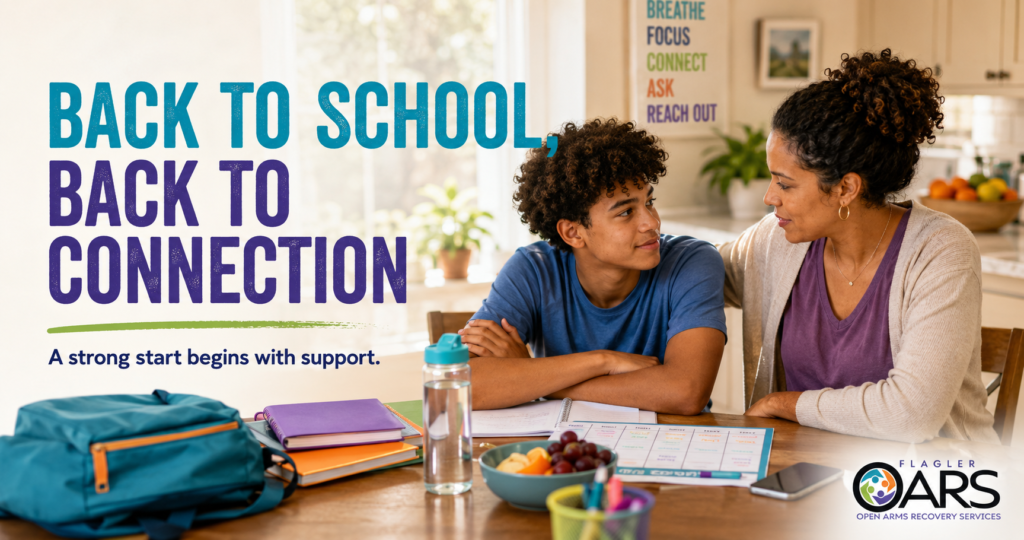
The first week of school is a big shift for everyone. New routines, new teachers, new expectations, and a whole lot of emotions packed into a few short days. For many families, it’s exciting. For others, it can feel overwhelming, especially if your household is navigating recovery, mental health challenges, or concerns about substance use.
At Flagler OARS, we want you to know this: a fresh school year can also be a fresh start. A chance to build protective routines, strengthen connections, and put prevention into everyday life in simple, realistic ways.
Why the first week matters
The first week sets the tone. Kids and teens are figuring out where they fit, what pressures they’re facing, and who they can trust. That’s why prevention isn’t just one conversation, it’s an ongoing relationship built on consistency, safety, and support.
Recovery-friendly routines that help everyone
Healthy structure supports recovery and reduces risk. Consider focusing on a few basics this week:
- Sleep comes first. A steady bedtime and wake-up time improves mood, focus, and emotional regulation.
- Plan predictable check-ins. A quick daily “high/low” conversation at dinner or in the car builds connection without pressure.
- Keep nutrition and hydration simple. Stable blood sugar and hydration can reduce irritability and anxiety.
- Create a calm reset after school. Even 20 minutes of quiet time, a snack, and no screens can help kids decompress.
These routines don’t need to be perfect. They just need to be consistent enough to create a sense of safety.
Prevention starts with connection
One of the strongest protective factors for youth is a trusted adult relationship. This week, aim for open, judgment-free conversations. You don’t have to have all the answers. You just have to stay approachable.
A few simple prompts to try:
- What felt easy today, and what felt hard?
- Who did you sit with at lunch?
- What’s something you wish teachers understood about students right now?
- If you ever felt pressured to do something unsafe, who could you talk to?
If your child shuts down, that’s okay. Keep showing up. Consistency builds trust over time.
Know the signs, and trust your instincts
The first week can bring normal stress, but it’s also a good time to watch for changes that may signal your child needs extra support, such as:
- sudden mood swings or ongoing irritability
- pulling away from friends or family
- changes in sleep, appetite, or energy
- skipping school, frequent “mystery” illnesses, or increased secrecy
If something feels off, it’s worth a conversation and, if needed, reaching out for help early.
If your family is in recovery
Back-to-school season can bring triggers: stress, schedule changes, social pressure, and financial strain. If you’re a parent or caregiver in recovery, give yourself extra grace this week. Small supports matter:
- plan your week on paper
- schedule meetings or check-ins you rely on
- build in a few minutes each day to breathe and reset
- ask for help with rides, supplies, or meals if you need it
Recovery is built one day at a time, and so is a healthy school year.
You are not alone
Flagler OARS is here to support our community with peer support, education, and connection to resources. Prevention and recovery work best when people feel seen, supported, and not judged.
If you or someone you care about needs support this school year, reach out. A strong start can make a real difference, and it’s never too early to ask for help.